
The Five Elements: Reclaiming the Full Cultural Scope of Hip-Hop
Sep
When most people hear the word “hip-hop” today, they immediately picture a microphone, a heavy bassline, and a rapper spitting bars over a trap beat. It is a common misconception that hip-hop is just a genre of music. But reducing hip-hop to just rap music is like looking at a massive oak tree and only seeing a single leaf. You are missing the roots, the trunk, the branches, and the entire ecosystem that keeps the thing alive.
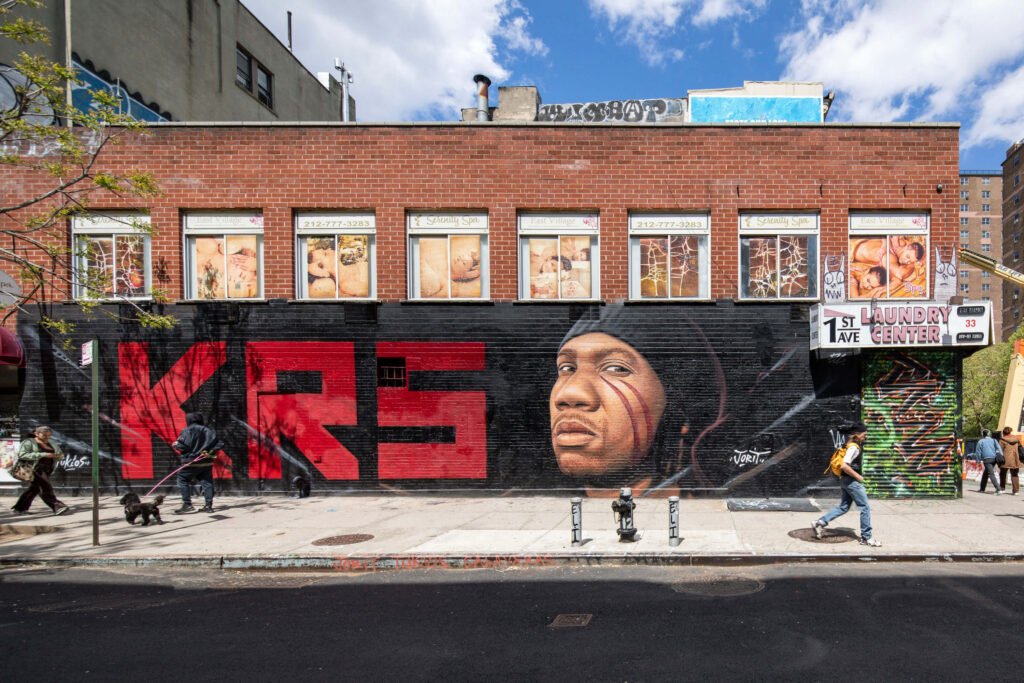
To truly understand the culture, we need to look past the commercialised, radio-friendly product and dig into the crates of history. The architects of this movement, notably Afrika Bambaataa and later codified by KRS-One, defined hip-hop not as a musical style, but as a holistic, multi-disciplinary culture built on five foundational elements – DJing, MCing, Breaking, Graffiti, and Knowledge.
Each element plays a distinct instrument in the grand orchestra of the culture. Together, they create a rhythm that has echoed from the rec rooms of the Bronx to every corner of the globe. If you want to find the groove of hip-hop, you have to understand how all five pieces fit into the mix. Let us break down the anatomy of a culture that refuses to be boxed in.
The Auditory and Visual Elements
The first four elements are the most visible and audible. They are the physical manifestations of the culture. They are the sound, the sight, and the movement that caught the world’s attention. But to appreciate them, we have to look at the specific role each one plays in keeping the heartbeat of the culture pumping.
DJing: The Foundation and the Architect
Every great building needs a solid foundation, and in hip-hop, that foundation is the DJ. Before there were MCs hyping up the crowd, before the dancers hit the floor, and before the writers hit the walls, there was the DJ. The DJ is the architect of the sonic landscape.
The origin story takes us back to August 11, 1973, at a back-to-school party in the Bronx hosted by Cindy Campbell. Her brother, Clive Campbell, better known as DJ Kool Herc, noticed that the crowd went wildest during the “break” of a funk record. This was the percussive, instrumental section where the melody stripped away and the drums took over. Herc innovated a technique he called the “Merry-Go-Round.” By using two turntables and two copies of the same record, he could isolate and extend the break indefinitely.
This was a monumental shift in musical history. The turntable was no longer just a playback device. It became an instrument. DJs like Grandmaster Flash refined this by inventing the quick mix theory and backspinning, allowing for seamless, rhythmic transitions that kept the dance floor in a continuous state of motion. The DJ controls the BPM, the energy, and the emotional arc of the party. Without the DJ creating the pocket, there is no groove for anyone else to find. The DJ samples the past to remix the present, laying down the sonic pavement for the rest of the culture to walk on.
MCing: The Voice and the Poet
If the DJ is the architect building the sonic house, the MC is the voice echoing through its halls. Originally, the Master of Ceremonies was simply the DJ’s hypeman. Their job was to grab the microphone, shout out the name of the DJ, tell the crowd to get down, and keep the energy high. Early pioneers like Coke La Rock and Cowboy (who is credited with inventing the hip-hop beatbox vocal technique) laid the groundwork for this vocal expression.
But as the culture evolved, so did the MC. The voice of the MC transformed from a simple party host into a complex lyrical poet. Artists began to develop intricate internal rhyme schemes, complex cadences, and storytelling abilities. The MC became the narrator of the culture. They took the raw, instrumental breaks provided by the DJ and painted vivid pictures with their words.
When Rakim dropped “Paid in Full” in 1987, he completely remastered the concept of flow. He moved away from the simple, end-rhyme couplets of the early days and introduced a multi-syllabic, conversational, and deeply rhythmic style that laid over the beat rather than just sitting on top of it. The MC is the translator of the streets, the philosopher of the block, and the voice of the voiceless. They take the frequency of the DJ and give it human articulation.
Breaking: The Physical Expression
While the DJ controls the sound and the MC controls the voice, the B-boys and B-girls control the physical space. Breaking, often mistakenly called breakdancing by the mainstream media, is the physical embodiment of the music. It is a highly athletic, deeply expressive dance form that turns the human body into a percussion instrument.
Breaking was born directly out of the DJ’s breakbeat. When DJ Kool Herc extended those instrumental breaks, the most energetic dancers would hit the floor to show off their moves. Herc called them his “break-boys” and “break-girls.” Breaking is not just a series of random dance moves. It is a highly structured language of movement consisting of toprock (standing footwork), downrock (floorwork), power moves (acrobatic spins and flips), and freezes (sudden, stylised halts in motion).
The true essence of breaking happens in the cypher. The cypher is the circular space where dancers battle, not just against each other, but against the music and their own physical limits. It is a physical conversation. A B-boy might throw down a complex set of footwork, and a B-girl will respond with a gravity-defying power move. It is about originality, musicality, and execution. Breaking takes the auditory rhythm of the DJ and translates it into kinetic energy. It is the culture in motion, proving that the body itself can be the ultimate instrument.
Graffiti: The Visual Art
If the music is the heartbeat and the dance is the movement, graffiti is the visual fingerprint of the culture. It is the aesthetic rebellion that claims public space and forces the world to look. In the early 1970s, the Bronx and much of New York City were suffering from severe urban decay. Buildings were burning, and the city was literally crumbling. The youth of the city felt invisible, ignored by the politicians and the media.
Graffiti was their way of saying, “We are here.” It started simply with “tagging,” which is the stylised writing of a writer’s chosen name or moniker. Pioneers like TAKI 183 took their names across the city on subway trains, turning the transit system into a moving canvas. As the culture grew, so did the complexity of the art. Writers like Phase 2 introduced “wildstyle,” a highly intricate, interlocking, and often unreadable lettering style that prioritised aesthetic flow and visual impact over legibility.
Graffiti artists, or writers, use spray paint, fat caps, skinny caps, and markers to create massive, colourful “pieces” (masterpieces). It is an art form that requires immense skill, an understanding of colour theory, and the courage to risk arrest to get it up. It reclaims the visual landscape of the city. It takes the grey, neglected concrete and injects it with vibrant, undeniable life. Graffiti is the visual frequency of hip-hop, ensuring that the culture is not just heard and felt, but seen.
The Fifth Element – Knowledge
For a long time, hip-hop was recognised globally for its four main elements. But as the culture grew and spread across the globe, a dangerous mutation began to occur. The commercial music industry saw the financial potential of rap music and began to heavily promote it, often at the expense of the other elements. Worse, the lyrics being promoted often glorified violence, materialism, and ignorance. The culture was losing its original frequency.
Recognising this drift, KRS-One, alongside the Universal Zulu Nation, emphasised the crucial, often overlooked fifth element: Knowledge.
Knowledge is the glue that binds the other four elements together. Without Knowledge, DJing is just playing records. Without Knowledge, MCing is just talking fast. Without Knowledge, Breaking is just gymnastics. Without Knowledge, Graffiti is just vandalism. Knowledge is the consciousness of the culture. It is the understanding of the history, the social realities, and the spiritual awareness that birthed the movement in the first place.
KRS-One often speaks about “Overstanding” rather than understanding. To understand is to stand under something, to be beneath it. To overstand is to rise above it, to look at it from a higher, more comprehensive perspective. Knowledge in hip-hop is about overstanding your place in the world. It is about knowing the history of your people, understanding the systemic forces that try to hold you down, and using the other four elements as tools for empowerment and liberation rather than self-destruction.
This element encompasses social consciousness. It is the reason why early hip-hop was used by Afrika Bambaataa to pull gang members out of violent street life and redirect their competitive energy into dance battles and DJ competitions. It is the reason why groups like Public Enemy and Boogie Down Productions used their platforms to educate the masses about political corruption and social inequality.
Knowledge also demands spiritual awareness. It is the recognition that the creative energy flowing through the DJ, the MC, the B-boy, and the writer comes from a higher source. It requires humility, respect for the elders who built the culture, and a commitment to passing that wisdom down to the next generation. The fifth element is the mind of hip-hop. It ensures that the culture remains a tool for building up the community, rather than just a product to be consumed and discarded by the masses. It is the ultimate truth that keeps the culture authentic.
The Elements in the 21st Century
Culture is not a museum exhibit. It is a living, breathing entity. If it does not evolve, it dies. As we navigate the 21st century, the five elements of hip-hop have survived, mutated, and adapted to new technologies and global landscapes. The core frequency remains the same, but the instruments have been remastered for a new generation.
Breaking Goes Global and Olympic
Perhaps the most visible evolution in recent years is the inclusion of Breaking in the Olympic Games, making its debut at the Paris 2024 Summer Olympics. For decades, breaking was an underground, street-level art form, often criminalised and misunderstood by mainstream sports authorities. Seeing B-boys and B-girls competing on the world’s most prestigious athletic stage was a monumental moment of validation.
While some purists argue that the competitive, judged nature of the Olympics strips the raw, organic soul from the cypher, others see it as a massive platform to showcase the athleticism and artistry of the dance to billions of people. Regardless of the debate, breaking has undeniably evolved from the cardboard mats of the Bronx to the global stage, inspiring a new generation of dancers worldwide to find their physical groove.
DJing in the Festival Era
The role of the DJ has expanded far beyond the block party. Today, DJing is the foundation of the multi-billion-dollar Electronic Dance Music (EDM) industry. The techniques pioneered by Grandmaster Flash and Afrika Bambaataa have evolved into complex digital setups using CDJs, stem separation, and massive festival sound systems.
While the scale has changed, the core function of the DJ remains the same: to read the crowd, control the energy, and take the audience on a sonic journey. The transition from digging in crates for vinyl to managing digital libraries is just a technological shift. The true DJs of today, those who actually mix and blend rather than just pressing play, are still the modern-day architects of the dance floor, keeping the BPM of the culture high.
Graffiti in the Digital and Legal Spaces
Graffiti has also seen a massive shift. The romanticised, dangerous era of bombing subway trains in the dead of night has been largely replaced by legal mural festivals, commissioned public art, and gallery exhibitions. Writers are now celebrated as fine artists rather than treated as vandals.
Furthermore, graffiti has mutated into the digital realm. Digital artists use tablets and software to create wildstyle lettering and character designs that push the boundaries of what is physically possible with a spray can. Projection mapping allows artists to throw massive, temporary graffiti pieces onto the sides of buildings without leaving a single drop of paint. The visual rebellion of graffiti has adapted, finding new canvases to ensure the visual frequency of the culture continues to vibrate through the modern landscape.
MCing and the Global Cypher
MCing has become a truly global language. The rhythmic cadence and poetic storytelling of hip-hop have been adopted and adapted by youth in every corner of the planet. From the massive K-Pop industry in South Korea, which heavily incorporates rap verses, to the booming Afrobeat scene in West Africa, to the favela funk of Brazil, the voice of the MC is everywhere.
These global MCs are not just copying American artists. They are sampling their own local cultures, rapping in their native tongues, and addressing their own specific social and political realities. They are taking the foundational blueprint of hip-hop and building their own unique structures. This global expansion proves that the core elements of hip-hop are not bound by geography or language. They are universal tools for expression.
Respecting the Holistic Culture
Hip-hop is vastly more than just a genre of music. It is a holistic, multi-disciplinary culture that encompasses sound, voice, movement, visual art, and profound consciousness. It was born out of the necessity to create joy, beauty, and community in environments designed to suppress them.
When we reduce hip-hop to just the commercial rap music we hear on the radio, we are doing a disservice to the pioneers who built it from the ground up. We are ignoring the DJ who spent countless hours perfecting the mix. We are ignoring the B-boy who risked injury to perfect the freeze. We are ignoring the writer who risked arrest to paint the train. And most importantly, we are ignoring the Knowledge that gives the entire movement its soul and purpose.
It is time we adjust our receivers and tune back into the full frequency of hip-hop. We must respect it as a comprehensive culture that offers tools for artistic expression, physical discipline, visual storytelling, and intellectual empowerment. The next time you hear a hip-hop track, listen closely. Hear the DJ’s foundation, feel the MC’s poetry, visualise the B-boy’s movement, see the graffiti’s colours, and respect the Knowledge that holds it all together.
Hip-hop is not just what you listen to. It is what you live. It is a culture that demands your respect, your participation, and your understanding. Let us keep the groove alive, honour the architects, and ensure that the five elements continue to resonate for generations to come.
References
- Chang, Jeff. Can’t Stop Won’t Stop: A History of the Hip-Hop Generation. St. Martin’s Press, 2005.
- KRS-One. The Gospel of Hip Hop: First Instrument. Powerhouse Books, 2009.
- Universal Zulu Nation. “Hip Hop Declaration of Peace.” Afrika Bambaataa and the Universal Zulu Nation, 2015.
- Lipsitz, George. Time Passages: Collective Memory and American Popular Culture. University of Minnesota Press, 1990. (Context on spatial reclaiming and urban geography in graffiti).
- Charnas, Dan. The Big Payback: The History of Hip-Hop Business. Gotham Books, 2010.