
Larry Levan and Paradise Garage: The Spiritual Predecessor
Oct
When you explore the history of dance music, the path you travel often leads you to a familiar crossroads. On one side, you have Chicago. The Windy City gets the official credit for naming the genre, stamping “house” onto the global cultural map. But if you tune into the right frequency and listen closely to the underlying groove, you will realise that New York provided the actual soul.
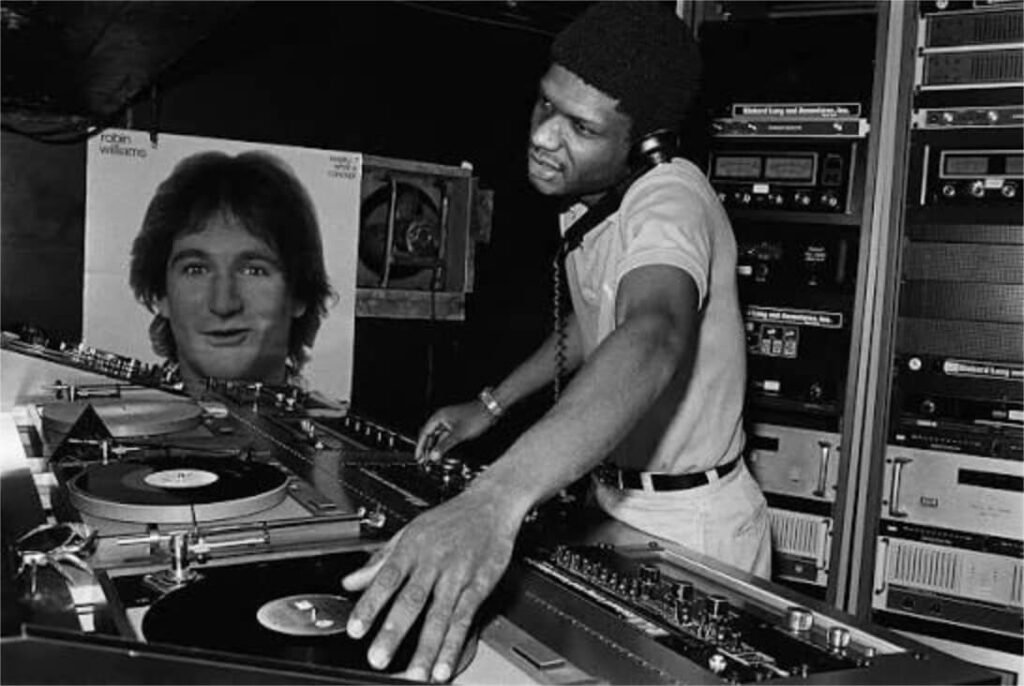
At the very centre of this New York soul was a dilapidated parking garage on King Street in the West Village. It was called the Paradise Garage. And spinning the records inside this concrete sanctuary was a man who did not just play music. He sculpted it, bent it, and breathed life into it. His name was Larry Levan.
To appreciate the modern underground club, you have to look back at the blueprint drawn up in that basement. We are going to explore how Levan’s unparalleled musicality, his masterful use of reverb and EQ, and the Garage’s strict sanctuary policies set a gold standard that still echoes through the dancefloors of today.
The Architecture of a Sanctuary
Before we talk about the man behind the decks, we need to talk about the room. The Paradise Garage was not just a venue. It was a physical manifestation of a feeling. Michael Brody, the founder, envisioned a space that felt like a church for the marginalised. The building itself was a former parking garage, which gave it a raw, industrial skeleton. But Brody and his team transformed it into a womb of sound and light.
The physical layout was crucial. There was no VIP section. There was no raised platform for the elite to look down upon the masses. The dancefloor was a single, unified entity. When you walked in, you were part of the collective. This lack of hierarchy was the first note in the Garage’s symphony. It told everyone in the room that they were exactly where they were supposed to be.
But the true magic of the room lay in its acoustics. Brody hired Richard Long, an audio genius, to design a custom sound system. Long did not just hang speakers and hope for the best. He treated the room like a giant musical instrument. He built massive, custom wooden horns for the bass, ensuring that the low end was felt in the chest rather than just heard in the ears. The mid-range and high frequencies were dispersed evenly, meaning there were no dead spots in the room. Whether you were right in front of the booth or tucked away in the shadows at the back, the music wrapped around you with the same warmth and clarity.
This sound system was the canvas. Larry Levan was the painter.
Larry Levan: The Maestro of the Turntables
Larry Levan was a Brooklyn kid who grew up playing records for his friends. He was mentored by David Mancuso, the pioneer of the private disco party known as The Loft. Mancuso taught Levan about the purity of sound, the importance of playing records in their entirety, and the sacredness of the dancefloor. But Levan took those lessons and pushed them into uncharted territory.
When Levan took over the resident DJ spot at the Garage in 1978, he was barely in his twenties. Yet, his musicality was staggering. He did not just mix tracks together. He deconstructed them. He understood that a record was not a static object. It was a living, breathing thing that could be reshaped in real time.
Levan’s approach to DJing was deeply emotional. He read the room with the intuition of a seasoned psychologist. He knew when the crowd needed to be pushed, when they needed to be comforted, and when they needed to be completely lost. He would take a track that everyone knew and play it in a way that made it feel entirely new. He was finding the groove in places other DJs never thought to look.
His record collection was vast, but it was his ability to edit and manipulate those records on the fly that set him apart. He would bring in multiple copies of the same record, cutting between different sections to create entirely new arrangements. He was essentially remixing live, creating extended, hypnotic journeys that could last for hours.
The Sonic Sculptor: Reverb, EQ, and Emotional Peaks
This is where we really need to talk about Levan’s technical genius. His use of the mixing desk was revolutionary. Before Levan, many DJs used the mixer simply to transition from one song to the next. Levan used the mixer as an instrument.
His mastery of the equaliser was legendary. He would use the EQ knobs to strip a track down to its barest elements. He might fade out the bass and the melody, leaving only a solitary hi-hat or a whispered vocal. He would hold the crowd in that state of tension, letting the anticipation build until it was almost unbearable. Then, with a subtle twist of his wrist, he would bring the bass back in, sweeping the frequencies up and letting the track explode back into its full, glorious self. The release of that tension created an emotional peak that was almost spiritual. People on the dancefloor would literally weep.
But his true signature was his use of reverb. Levan loved the sound of space. He would take a vocal or a snare drum and drown it in reverb, pushing it to the back of an imaginary, massive hall. This technique, often referred to as the “Levan reverb”, created a sense of vastness. It made the intimate, sweaty basement of the Garage feel like it had expanded into the cosmos.
He used reverb not just as an effect, but as a transitional tool. As one track was fading out, he would apply heavy reverb to its final notes, letting them ring out and decay into the soundscape. This created a sonic bridge, a misty atmosphere that allowed him to bring in the next track seamlessly. The reverb blurred the lines between the songs, creating a continuous, unbroken flow of music. It was a masterclass in tension and release, a perfect crossfade of human emotion.
The Sanctuary: No Photos and the Safe Space
The music was only half the story. The culture of the Paradise Garage was just as important as the sound system. In the late 1970s and 1980s, New York City was a tough place to live. The AIDS crisis was beginning to devastate the queer community. Racism and homophobia were rampant. For the Black, Latino, and queer patrons who made up the core of the Garage’s crowd, the outside world was often hostile.
The Garage was their refuge. It was a safe space in the truest sense of the phrase. To protect this sanctuary, Brody and Levan implemented a strict door policy and a firm “no photos” rule.
The door was guarded by Richard D. S., a formidable figure who knew exactly who belonged inside. He was not looking for celebrities or tourists. He was looking for people who were there for the music and the community. If you looked like you were there to gawk, or if you brought the outside world’s prejudices through the door, you were turned away. This kept the crowd pure, dedicated, and respectful.
The “no photos” policy was equally vital. In an era before smartphones, cameras were still a intrusion. Levan and Brody understood that the magic of the Garage relied on people letting go of their inhibitions. If people felt like they were being watched, or if they worried about their image, they could not fully surrender to the music. By banning cameras, they removed the male gaze and the judgmental eyes of the outside world.
Inside the Garage, you could dance however you wanted. You could cry, you could sweat, you could lose yourself completely. You were free from the performative aspects of daily life. This policy created a profound sense of trust. The dancefloor became a place of genuine connection, where people communicated through movement and shared rhythm rather than words or social media posts.
This ethos set the gold standard for modern underground clubs. Today, when you see a club enforcing a strict no-photos policy, or when you see a promoter curating a door policy to ensure a safe, inclusive environment, they are directly channelling the spirit of the Paradise Garage. They are recognising that a club is not just a business selling alcohol. It is a temporary autonomous zone, a sanctuary where the soul can breathe.
The Legacy: From New York Soul to Global House
The Paradise Garage closed its doors in 1987, following the tragic death of Michael Brody from AIDS. Larry Levan, heartbroken and struggling with his own health and personal demons, passed away two years later. The physical space was gone, but the frequency they created was remastered into the global consciousness.
The legacy of the Garage is inextricably linked to the birth of house music. Frankie Knuckles, a young DJ who had worked at the Garage alongside Levan, moved to Chicago to play at a club called The Warehouse. Knuckles took the ethos, the musicality, and the deep, soulful sound of the Garage with him. The patrons at The Warehouse loved the music so much that record stores started labelling the tracks they wanted as “house music”, short for Warehouse music.
So, Chicago gave the genre its name. But the soul of that music, the deep emotional resonance, the focus on the sanctuary of the dancefloor, and the technical mastery of the mix, all came from New York. It came from Larry Levan.
Levan’s influence is everywhere in modern dance music. When a DJ today uses a filter sweep to build tension, they are using a tool Levan perfected. When a producer drenches a vocal in reverb to create a sense of space, they are walking in Levan’s footsteps. When a club bans phones to protect the vibe of the room, they are upholding the rules written by the Garage.
He taught us that DJing is not about showing off your record collection. It is not about playing the newest track or the biggest hit. It is about taking the crowd on a journey. It is about finding the groove and holding it, nurturing it, and letting it grow until it becomes something transcendent.
The Final Fade Out
Larry Levan was a flawed man. He struggled with addiction, and his life was cut tragically short. But when he stood behind the decks at the Paradise Garage, he was untouchable. He was a conduit for something greater than himself. He took the raw, pulsing energy of the city and refined it into pure, unadulterated joy.
The Paradise Garage was more than just a club. It was a revolution in rhythm. It proved that a dancefloor could be a place of healing, a place of equality, and a place of profound musical discovery. Chicago may have given house music its name, but New York, through the vision of Michael Brody and the sheer, unadulterated genius of Larry Levan, gave it its soul.
As we navigate the modern landscape of electronic music, with its massive festivals and commercialised superclubs, it is vital to remember the roots. We need to remember the dark, sweaty basement on King Street. We need to remember the custom wooden speakers and the heavy reverb. We need to remember the importance of a safe space and the power of putting the phone away to just feel the music.
The needle may have lifted from the Paradise Garage, but the track never really ends. The groove is still playing. You just have to know how to listen. Keep finding the groove, keep protecting the sanctuary, and never forget the soul of the sound.
References
- Brewster, B., & Broughton, F. (1999). Last Night a DJ Saved My Life: From King Tubby to Grandmaster Flash, a History of the DJ. Grove Press.
- Lawrence, T. (2003). Love Saves the Day: A History of American Dance Music Culture, 1970-1979. Duke University Press.
- Lawrence, T. (2009). Hold On to Your Dreams: Arthur Russell and the Downtown Music Scene, 1973-1992. Duke University Press. (Provides excellent context on the downtown NY music scene Levan inhabited).
- Shapiro, P. (2000). Modulations: A History of Electronic Music: Throbbing Words on Sound. Caipirinha Productions.
- Reynolds, S. (1998). Energy Flash: A Journey Through Rave Music and Dance Culture. Faber and Faber. (UK title: Generation Ecstasy).