
From K-DST to Los Santos: The Evolution of Hip-Hop Curation in GTA
Sep
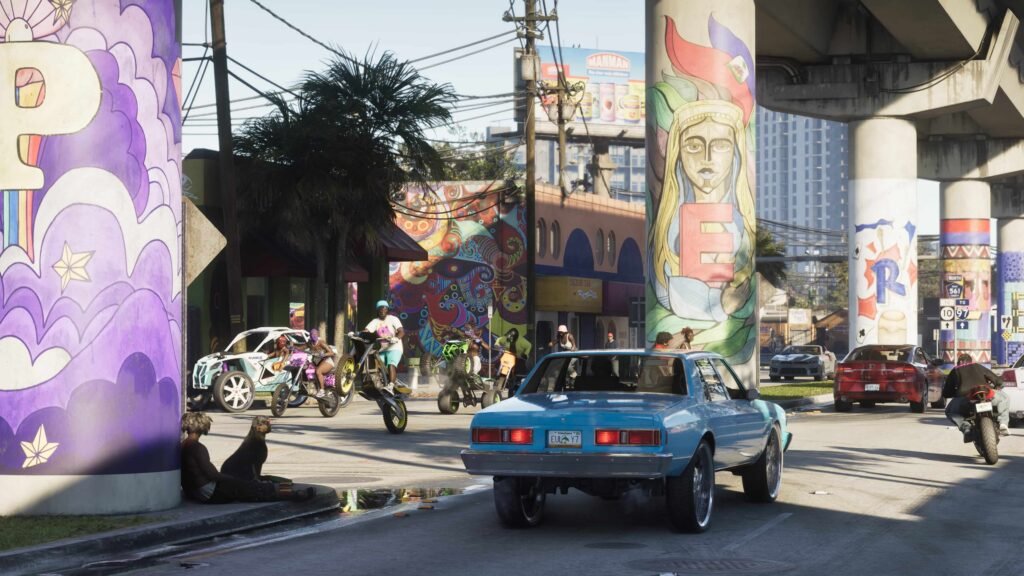
The lowrider bounces in perfect time with the bassline. The palm trees blur past the windshield. The sun dips below the digital horizon of Los Santos, casting a neon glow over the concrete sprawl. For millions of players, this is not just a video game sequence. It is a cultural touchstone. The heartbeat of the Grand Theft Auto franchise, particularly in its Los Santos iterations, is undeniably hip-hop.
Rockstar Games did not merely use rap music as background noise to fill the silence between missions. They sampled the culture, equalized the history, and broadcasted it to a global audience. Hip-hop is the operating system of Los Santos. It is the uncompressed audio track running beneath the polygonal rendering of the city, providing the emotional and rhythmic baseline for the player’s actions. From the foundational G-Funk of San Andreas to the modern trap and West Coast revival of GTA V, the franchise has meticulously traced the real-world evolution of the genre. By examining the lineage of these radio stations, we can understand how Rockstar transformed a video game soundtrack into an interactive museum of hip-hop history.
San Andreas and Radio Los Santos: The G-Funk Foundation
When Grand Theft Auto: San Andreas dropped in 2004, it was a technological marvel, but its cultural impact was equally seismic. The game transported players to the early 1990s, a golden era for West Coast hip-hop. At the center of this auditory experience was Radio Los Santos, hosted by the legendary real-world DJ Julio G. This station was not just a playlist. It was a high-fidelity preservation of a specific cultural frequency, bypassing latency and dropping the needle directly into the heart of the G-Funk era.
G-Funk, pioneered by producers like Dr. Dre and DJ Quik, was characterized by its slow, rolling basslines, high-pitched Moog synthesizers, and heavy sampling of 1970s P-Funk. It was music designed for cruising, and Rockstar understood that the primary mode of transportation in Los Santos was the automobile. The station acted as a time machine, perfectly syncing the audio bitrate with the visual framerate of a lowrider bouncing down Vinewood Boulevard.
Consider the foundational track that often greets players when they first tune in. Dr. Dre featuring Snoop Doggy Dogg with “Nuthin’ But A ‘G’ Thang” is a masterclass in laid-back menace.
The heavy, uncompressed bass of the song mirrors the physical weight of the vehicles in the game. The lyrical content, boasting about neighborhood loyalty and street credibility, perfectly sets the stage for Carl Johnson’s return to Grove Street. The music acts as the narrative source code, initializing the player’s understanding of the game’s world.
Radio Los Santos did not rely solely on the platinum-selling giants. The curation dug deep into the crates to find the B-sides and the underground anthems that defined the era’s authentic texture. Ice Cube’s “It Was A Good Day” provides a masterful contrast to the high-octane violence of the gameplay.
The song’s smooth, Isley Brothers-sampled production creates a false sense of security. The lyrics describe a rare day free from police harassment and gang violence, which creates a brilliant, satirical dissonance when the player is actively engaging in those exact activities while the song plays. The audio mixing here is genius. The chill, nostalgic vibe of the track clashes with the chaotic, violent reality of the gameplay, highlighting the absurdity of the game’s world. Another crucial element of the San Andreas experience was the inclusion of Warren G and Nate Dogg’s “Regulate”.
This track is essentially a cinematic short story set to a beat. Its narrative structure mirrors the mission-based structure of the game itself. The song tells a tale of a night gone wrong, ending in a violent shootout and a narrow escape. When this plays during a high-speed police chase, the lyrical curation elevates the gameplay from a simple driving mechanic to a living, breathing hip-hop music video.
For a massive segment of the player base, Radio Los Santos served as their first deep dive into 90s West Coast hip-hop. The station was an educational tool, a digital mixtape that introduced a global audience to the pioneers of the genre. It cemented the game’s cultural identity, proving that a video game could possess the curatorial authority of a legendary radio station. The G-Funk era was the foundation, and Rockstar built a digital empire on top of it.
GTA V: West Coast Classics and the Modern Frequency
Fast forward to 2013. The release of Grand Theft Auto V marked a massive generational leap in gaming technology. The world was larger, the graphics were sharper, and the audio engine was completely overhauled. The cultural landscape of hip-hop had also shifted dramatically. The laid-back, synth-heavy G-Funk of the 90s had evolved into the aggressive, high-BPM trap music and the gritty, modern West Coast revival of the 2010s. Rockstar responded by splitting the hip-hop curation into two distinct stations, creating a duality that mirrored the city itself.
West Coast Classics, hosted by DJ Pooh, served as the legacy code running perfectly on new hardware. This station was the nostalgia filter applied to the San Andreas experience. It took the foundational G-Funk and gangsta rap tracks and remastered them for a new generation. It featured heavyweights like N.W.A, Ice Cube, and 2Pac. When N.W.A’s “Express Yourself” blasts through the car speakers, it acts as a direct bridge to the previous generation of the game. You can experience the track here: https://www.youtube.com/results?search_query=NWA+Express+Yourself+Official+Video. The station provided comfort to veteran players, offering a familiar frequency in a newly rendered world. It was the uncompressed, lossless audio of the 90s, preserved without a single dropped frame.
However, the true evolution of the franchise’s audio identity was found in the newly revamped Radio Los Santos, hosted by the iconic Big Boy. If West Coast Classics was the legacy hardware, Radio Los Santos was the bleeding-edge software. Big Boy’s DJ banter acted as the metadata, tagging the cultural context for the player and grounding the modern tracks in the reality of contemporary Los Angeles.
The modern iteration of Radio Los Santos embraced the fragmented, aggressive sounds of 2010s hip-hop. The G-Funk bounce was replaced by the heavy, distorted 808 bass of trap music and the frantic, hyphy energy of the Bay Area and modern LA. This shift in sound design perfectly mirrored the shift in the game’s narrative tone. While San Andreas was about neighborhood loyalty and personal growth, GTA V was about heist-based capitalism, greed, and the absurdities of modern wealth. The music needed to reflect that heightened, chaotic energy. Kendrick Lamar’s “m.A.A.d city” is a prime example of this modern curation.
The track is a chaotic, multi-part epic that shifts from a slow, menacing crawl to a frantic, double-time climax. The lyrical content paints a vivid picture of the violent, unpredictable underbelly of Compton. When this track plays during a shootout in the game, the audio-visual synchronization is flawless. The beat drops exactly when the player’s actions escalate, creating a seamless integration of gameplay and soundtrack. The bandwidth of the culture had expanded, and the game’s audio engine was built to handle the heavy data load of modern trap.
The station also highlighted the modern West Coast revival, showcasing artists who were redefining the region’s sound. YG’s “Who Do You Love?” brings a gritty, street-level authenticity to the playlist.
The track’s minimalist, bass-heavy production is a stark contrast to the lush, sample-heavy G-Funk of the 90s. It reflects the modern economic realities of the streets, where the hustle is less about cruising in a lowrider and more about navigating a hyper-capitalist, digital age. Similarly, Tyler, The Creator’s “Tamale” injects a dose of avant-garde, experimental energy into the station.
The song’s erratic beat switches and aggressive delivery mirror the unpredictable, satirical tone of GTA V’s open world. By splitting the curation, Rockstar acknowledged the historical weight of the genre while simultaneously pushing the franchise into the modern era. The transition from San Andreas to GTA V was like upgrading from a 128kbps stream to a high-resolution lossless file. The core identity remained intact, but the fidelity, the complexity, and the cultural bandwidth were vastly improved.
The Lyrical Curation: Mixing the Narrative EQ
Selecting the right beats is only half the battle in audio engineering. The true genius of Rockstar’s hip-hop curation lies in the lyrical selection. The lyrics are the source code of the game’s narrative. Rockstar acts as the executive producer, meticulously mixing the audio to match the visual rendering of Los Santos. The tracks are not chosen at random. They are selected because their lyrical themes subtly mirror the game’s core motifs of crime, ambition, systemic satire, and the relentless hustle.
Hip-hop has always been a genre of storytelling and social commentary. It is inherently tied to the critique of systemic oppression, the glorification of the hustle, and the exploration of moral ambiguity. These are the exact same themes that drive the Grand Theft Auto narrative. The lyrical curation amplifies the game’s satire by creating a constant, rhythmic dialogue between the music and the on-screen action.
Consider the theme of ambition and the pursuit of wealth. In GTA V, Michael, Trevor, and Franklin are not just criminals. They are entrepreneurs operating in an unregulated, violent free market. The lyrics of the hip-hop tracks on Radio Los Santos frequently boast about material wealth, designer clothes, and financial dominance. When a player is driving a stolen supercar through the wealthy streets of Vinewood Hills while a track about acquiring wealth plays, the lyrical content reinforces the player’s in-game objectives. The music acts as a motivational audio track, pushing the player to complete the next heist and upgrade their digital portfolio.
However, Rockstar also uses the lyrics to highlight the grim reality of this pursuit. The contrast between the glamorous, materialistic lyrics of the G-Funk era and the grimy, survivalist lyrics of the modern trap era reflects the shift in the game’s own tone. In San Andreas, the lyrics often focused on community, loyalty, and surviving the neighborhood. In GTA V, the lyrics are more individualistic, paranoid, and focused on personal gain. This lyrical shift mirrors the narrative shift from CJ’s desire to save his family to the three protagonists’ desire to secure their own financial futures at any cost.
The anti-authority sentiment in hip-hop is another crucial element that Rockstar leverages. The genre has a long history of clashing with law enforcement, and GTA’s gameplay loop heavily involves evading or fighting the police. N.W.A’s “Straight Outta Compton” or Ice Cube’s “Fuck tha Police” are not just songs. They are thematic manifestos that align perfectly with the player’s interactions with the LSPD.
When a five-star wanted level is active and these tracks are playing, the lyrical defiance becomes the player’s defiance. The audio mixing creates a powerful feedback loop where the music justifies the gameplay, and the gameplay brings the music to life.
Furthermore, the lyrical curation serves to deepen the game’s satire. GTA satirizes American culture, and hip-hop is inherently tied to that critique. The radio stations amplify this by playing tracks that boast about excess, violence, and materialism, contrasting sharply with the player’s often desperate, chaotic, or absurd reality. A player might be listening to a song about driving a pristine, million-dollar sports car while actually driving a rusted, dune buggy that is about to explode. This dissonance is the core of Rockstar’s comedic timing. The lyrics provide the straight man, while the gameplay provides the punchline.
Rockstar’s approach to lyrical curation is essentially an exercise in narrative equalization. They boost the frequencies of the lyrics that match the game’s themes and cut the frequencies that do not. They act as the ultimate crate-diggers, finding the exact tracks where the lyrical content, the production style, and the cultural context align perfectly with the digital world they have built. The result is a soundtrack that feels less like a licensed playlist and more like an organic extension of the game’s universe.
The Interactive Museum
The evolution of hip-hop in the Grand Theft Auto series is a testament to the power of audio curation in interactive media. Rockstar Games did not just license popular songs to sell copies of a video game. They built an interactive museum of the genre’s history, preserving the cultural artifacts of the past while broadcasting the cutting-edge sounds of the present.
From the foundational G-Funk of San Andreas, which established the cultural identity of Los Santos, to the modern trap and West Coast revival of GTA V, the franchise has meticulously traced the real-world evolution of hip-hop. The stations serve as a digital archive, allowing players to experience the genre’s history not as passive listeners, but as active participants. The game is the turntable, and the player is the DJ, scratching through the history of the culture as they navigate the digital streets.
The legacy of this audio curation extends far beyond the game itself. For an entire generation, the soundtracks of San Andreas and GTA V were their introduction to the pioneers of hip-hop. The game democratized access to the culture, bypassing traditional media gatekeepers and delivering the music directly to the player’s console. The heartbeat of Los Santos continues to pulse, a high-fidelity, uncompressed tribute to the genre that built the city, proving that in the world of Grand Theft Auto, the music is just as important as the mission.
References
- Rockstar Games. (2004). Grand Theft Auto: San Andreas Official Game Guide. BradyGames.
- Rockstar Games. (2013). Grand Theft Auto V Official Game Guide. BradyGames.
- Pavlovich, I. (2013). “The Music of GTA V: An Interview with Ivan Pavlovich.” Rockstar Newswire.
- Chang, J. (2005). Can’t Stop Won’t Stop: A History of the Hip-Hop Generation. St. Martin’s Press.
- George, N. (1998). Hip Hop America. Viking Press.
- West, M. (2014). “How GTA V’s Radio Stations Redefined Video Game Soundtracks.” Pitchfork Media.