
The Bronx Renaissance: How Urban Decay Inadvertently Created Hip-Hop
Sep
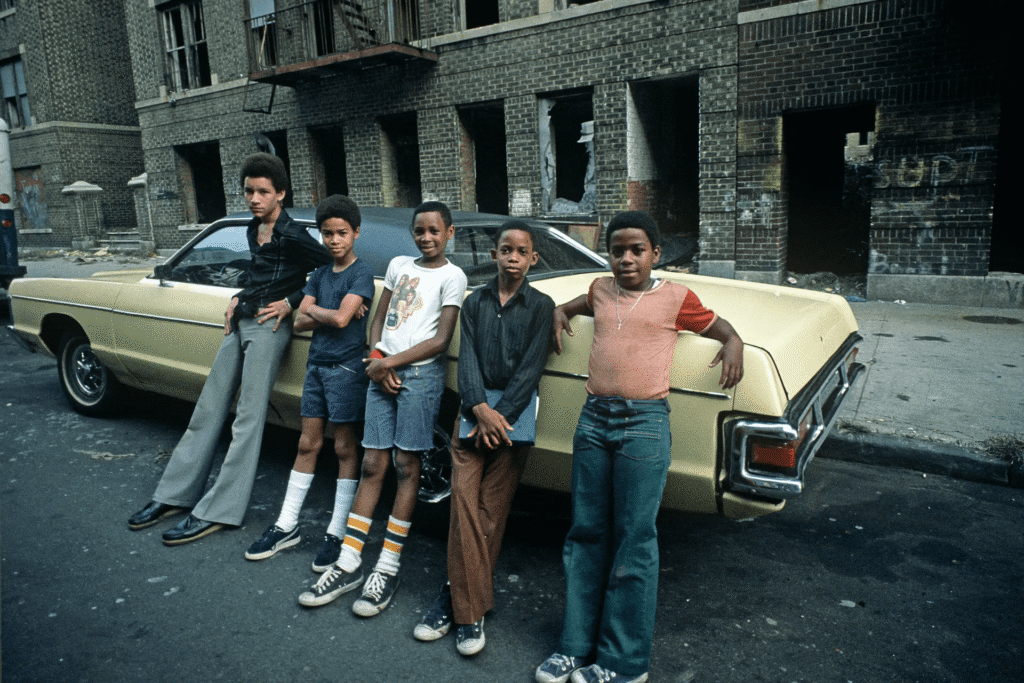
To understand the birth of hip-hop, you have to first understand the silence that preceded it. Picture the South Bronx in the 1970s, it was not just a neighbourhood it was a cautionary tale. It was a landscape of dissonance, where the crackle of burning buildings provided the background noise to a community pushed to the absolute brink.
When people talk about the origins of this culture, they often romanticise the struggle. But the reality was far heavier. The Bronx was burning, both literally and metaphorically, and the people left in the ashes were expected to simply fade away into the static.
Instead, they found the groove. They took the broken pieces of their environment and remastered them into a global frequency.
To grasp how hip-hop emerged, we have to look past the music for a moment and examine the soil it grew from. This culture was not a spontaneous musical accident. It was a direct, brilliant response to a manufactured wasteland. It was the sound of a community refusing to be erased. The socio-economic vacuum created by disastrous urban planning and systemic municipal neglect did not just leave empty lots. It left a void that demanded to be filled. And when the city turned off the lights, the youth of the Bronx decided to build their own sound system.
This is the story of how a massive infrastructure project and a decade of deliberate decay created the exact conditions for the greatest cultural movement of the modern era. We are going to trace the rhythm of this history, from the concrete scars of the Cross-Bronx Expressway to the legendary rec room at 1520 Sedgwick Avenue. We will explore how a lack of resources forced a generation to invent new ways to make noise, ultimately changing the frequency of the entire world.
A City on the Verge of Bankruptcy
Before we dive into the specific geography of the Bronx, we need to set the broader tempo. The 1970s in New York City were defined by a severe fiscal crisis. The city was essentially bankrupt. The daily headlines screamed about municipal collapse. In this climate of financial panic, the city’s leadership had to make brutal choices about where to allocate their dwindling resources.
Unfortunately for the outer boroughs, and specifically the South Bronx, those choices were made with a cold, calculated indifference. The concept of “planned shrinkage” became the unofficial policy for neighbourhoods deemed unsalvageable. Fire stations were closed. Police patrols were reduced. Sanitation services were slashed. The message to the residents was clear. The city was pulling the plug. They were going to let these neighbourhoods burn out and blow away.
This systemic neglect created a profound socio-economic vacuum. When basic services disappear, the social fabric begins to tear. The informal economy takes over. The underground rises to the surface. For the young people living in these neglected zones, survival became a daily remix. They had to figure out how to thrive in an environment that was actively hostile to their existence. This pressure cooker environment was the ultimate incubator. It forced a level of creativity and resilience that you simply cannot teach in a classroom. When the formal structures of society collapse, the people are forced to build their own. And in the South Bronx, they built a culture.
The Cross-Bronx Expressway and the Concrete Scar
To understand the physical and economic destruction of the Bronx, we have to look at the man who held the blueprint. Robert Moses was known as the master builder of New York. He shaped the modern city with his parks, bridges, and highways. But his vision of progress came at a devastating human cost. His crowning achievement, and his most destructive legacy in the Bronx, was the Cross-Bronx Expressway.
Moses envisioned a massive highway cutting directly through the heart of the borough. It was designed to connect New Jersey to upstate New York, allowing suburban commuters to bypass the city entirely. But to build this concrete artery, Moses had to carve through established, thriving, working-class neighbourhoods. He looked at the vibrant communities of East Tremont and saw only empty space on a map. He saw a straight line.
The construction of the Expressway was an act of physical violence against the community. It displaced over a thousand families. It demolished hundreds of apartment buildings. But the physical destruction was just the opening track. The long-term socio-economic fallout was where the real damage occurred.
The Expressway acted as a massive physical barrier. It sliced through the neighbourhood, creating a literal wall of concrete and noise. It divided communities that had previously been interconnected. The streets that once pulsed with foot traffic and local commerce were suddenly overshadowed by the roar of eighteen-wheelers. The local businesses, which relied on pedestrian traffic, began to wither and die.
This physical division accelerated a demographic shift that had already been brewing. White flight was already happening, driven by broader national trends and the construction of suburban housing. But the Cross-Bronx Expressway acted as a massive accelerant. It provided a direct, high-speed route out of the city for those who could afford to leave. As the middle-class families packed up their cars and drove out to the suburbs, they took their tax dollars with them.
The destruction of the tax base was the fatal blow. With a shrinking population and a depleted tax roll, the city had even less money to maintain the neighbourhood. The buildings that were left behind began to deteriorate. Landlords, facing declining property values and rising maintenance costs, stopped making repairs. The buildings became slums.
When the buildings became completely unprofitable, the landlords turned to a darker strategy. They realised that the insurance payouts for a burned-down building were often higher than the value of the property itself. Arson became a twisted form of real estate investment. The famous images of the Bronx in the 1970s, with entire blocks reduced to smouldering rubble, were not just the result of random riots or accidental fires. They were the result of a calculated, economic decision by property owners to cash out and leave.
The Cross-Bronx Expressway literally and figuratively cut through the mix of the community. It destroyed the physical infrastructure, drained the economic lifeblood, and left behind a landscape of empty lots and burned-out shells. Robert Moses wanted to build a highway to move cars. Instead, he built a monument to urban decay. He created the exact socio-economic vacuum that would force the next generation to find a completely new way to express themselves. The concrete scar he left behind would become the foundation for a new kind of rhythm.
The Gang Truce, The Rec Center and the Birth of the Block Party
With the physical landscape in ruins and the economy in shambles, the social landscape of the South Bronx was equally fractured. The youth of the neighbourhood, lacking resources and facing a bleak future, organised themselves into gangs. Groups like the Black Spades, the Ghetto Brothers, and the Savage Skulls ruled the streets. The gangs provided a sense of identity, protection, and belonging in a world that offered them none of those things. But this territorial organisation also led to intense, often deadly, violence. The streets were a battleground, and the constant threat of conflict kept the community in a state of high anxiety.
But as the physical environment changed, so did the social dynamics. The sheer scale of the destruction and the shared experience of neglect began to foster a sense of unity among the different factions. Leaders within the gangs started to realise that fighting each other was only keeping them down while the rest of the world ignored their plight. They needed a new outlet. They needed to redirect that intense, territorial energy into something constructive.
This shift was heavily influenced by figures like Afrika Bambaataa, a former warlord of the Black Spades. Bambaataa recognised the power of music and culture to unite people. He transformed his gang, the Black Spades, into the Universal Zulu Nation. The Zulu Nation was not about turf wars. It was about peace, unity, love, and having fun. They used music as a tool for social transformation. They organised peace treaties and truces, bringing rival gang members together to talk and, more importantly, to dance.
The ultimate manifestation of this cultural shift happened on August 11, 1973. A teenager named Cindy Campbell wanted to earn some extra money for back-to-school clothes. She decided to throw a party in the recreation room of her apartment building at 1520 Sedgwick Avenue. She charged a quarter for ladies and fifty cents for gentlemen at the door. She asked her older brother, Clive Campbell, to play the music.
Clive was known to his friends as DJ Kool Herc. Herc had immigrated from Jamaica, and he brought with him the tradition of the sound system. In Jamaica, DJs would set up massive speakers in the streets and play the latest records, talking over the music to hype up the crowd. Herc adapted this tradition to the reality of the Bronx. He did not have the latest American pop records. The crowds in the Bronx did not want to hear smooth soul or disco. They wanted to dance. They wanted the heavy, percussive parts of the records. To understand the Jamaican sound system influence that Herc brought to the Bronx, check out the toasting and sound system culture in Jamaica:
Herc noticed that the crowd went absolutely wild during the “breaks” of the songs. The break was the instrumental, percussive section where the melody dropped out and the drums took over. James Brown, Baby Huey, and Incredible Bongo Band all had these massive breaks. But on a standard record, the break only lasted a few seconds before the vocals came back in.
Herc figured out a way to extend that moment. He bought two copies of the same record. He put one on each turntable. When the break started on the first turntable, he would cue up the exact same break on the second turntable. Just as the break was about to end on the first record, he would switch the crossfader to the second turntable, playing the break again. He would switch back and forth, looping the percussive section indefinitely. He called this technique the “Merry-Go-Round”. This was a monumental innovation. Herc was no longer just playing records. He was using the turntables as an instrument. He was isolating the purest, most danceable part of the music and stretching it out. He created a continuous, unbroken groove. The dancers who went hardest during these breaks became known as “break-boys” and “break-girls,” or b-boys and b-girls.
The party at 1520 Sedgwick Avenue was a massive success. It proved that you did not need a fancy club or a professional sound system to create a powerful cultural experience. You just needed a rec room, a couple of turntables, some heavy speakers, and a crowd that was hungry to move. The block party became the primary venue for this new culture. It was democratic, accessible, and entirely community-driven. The gangs had put down their weapons and picked up the dance. They had remastered their energy, turning the destructive force of the streets into the creative force of the dance floor. Hear the foundational sound that Kool Herc was spinning, the heavy breaks that started it all:
Making Something from Nothing and the Innovation of the Turntable
The block parties were the physical space where hip-hop was born, but the music itself was born out of a profound lack of resources. To understand the sonic innovation of early hip-hop, you have to understand what these kids did not have. They did not have access to formal music education. The public schools in the South Bronx were underfunded and crumbling. Music programs were the first to be cut when the budgets were slashed.
They did not have money to buy traditional instruments. A guitar, a keyboard, or a drum set were luxury items that were completely out of reach for most families in the Bronx. If you wanted to make music, you could not just go to a store and buy an instrument. You had to look at the world around you and figure out how to make noise with what was available.
This scarcity forced a radical redefinition of what an instrument could be. The turntable, originally designed just to play back recorded sound, was transformed into a primary musical instrument. The Technics SL-1200 turntable became the weapon of choice. It was durable, had a high-torque direct drive motor that allowed for quick manipulation, and could withstand the heavy use of the block parties.
But the turntable was only half of the equation. To truly manipulate the sound, the DJs needed a way to mix the two records seamlessly. They needed a mixer. But professional audio mixers were incredibly expensive. So, they built their own. They used cheap audio equipment, soldering irons, and sheer ingenuity to build custom mixers that allowed them to crossfade between the two turntables. They were literally building the tools of their own liberation from scrap parts.
Once the DJs established the continuous breakbeat, they needed someone to guide the energy of the crowd. This is where the MC, or Master of Ceremonies, came into the picture. Initially, the MC was just the DJ’s hype man. They would get on the microphone and shout out the name of the sound system, tell the crowd to throw their hands in the air, and give shout-outs to their friends in the audience.
But as the parties went on and the crowds grew, the role of the MC evolved. They started to develop a rhythm to their speech. They began to rhyme. They drew on the rich oral traditions of the African American community, from the spoken word poetry of the Last Poets and Gil Scott-Heron to the rhythmic boasting of the blues and the playful insults of “the dozens.” They also drew heavily on the Jamaican tradition of “toasting,” which Kool Herc and others had brought with them.
The early MCs, like Coke La Rock and Cowboy (who was part of Grandmaster Flash and the Furious Five), started to develop complex rhyme schemes. They would ride the beat, using their voice as another percussive instrument. They were painting pictures with their words, describing the realities of their lives in the Bronx, boasting about their skills, and keeping the crowd engaged. The spoken-word rhyming added a new layer of narrative to the music. It gave a voice to the voiceless. It allowed the youth to tell their own stories, in their own words, over the heavy, unrelenting beat of the break.
This innovation was not just musical. It was deeply philosophical. Hip-hop was built on the concept of the “sample.” The DJs were taking existing records, finding the most powerful fragments, and recontextualising them to create something entirely new. This mirrored the way the youth of the Bronx were taking the fragments of their broken city and recontextualising them to build a new culture. They were sampling the past to create the future.
The culture also expanded beyond the music. The b-boys and b-girls were using their bodies as instruments, developing an acrobatic, highly athletic style of dance that mirrored the complexity of the breakbeats. And the visual artists were taking to the streets, using spray paint to turn the blank, burned-out walls of the Bronx into massive, vibrant canvases. Graffiti became the visual frequency of the culture. It was a way of saying, “We are here. We exist. We matter.” It was a demand for visibility in a city that had tried to make them invisible.
The Ultimate Remix
When you look back at the South Bronx in the 1970s, it is easy to focus only on the tragedy. It is easy to see the burning buildings, the shattered windows, and the concrete scar of the Cross-Bronx Expressway, and feel only a sense of profound loss. Robert Moses and the city planners looked at the Bronx and saw a problem to be solved through demolition and neglect. They thought they could just pave over the community and move on.
But they fundamentally misunderstood the people who lived there. They did not realise that you cannot destroy a community’s spirit just by destroying their buildings. When the city turned its back on the Bronx, the youth of the Bronx turned inward. They looked at the rubble and saw raw materials. They looked at the silence and heard a beat.
Hip-hop is the ultimate triumph of human creativity over systemic oppression. It is the sound of a community refusing to be defined by its decay. The DJs, the MCs, the b-boys, and the graffiti writers took the socio-economic vacuum created by disastrous urban planning and filled it with an unstoppable cultural force. They found the groove in the static. They took the discarded records, the broken turntables, and the empty lots, and they remastered them into a global phenomenon.
Today, hip-hop is the dominant cultural force on the planet. It has crossed every border, spoken every language, and influenced every corner of the globe. But no matter how massive it gets, no matter how many billions of dollars it generates, its core frequency remains the same. It is still about making something out of nothing. It is still about taking the broken pieces of your reality and mixing them into something beautiful.
The story of hip-hop is a reminder that culture cannot be legislated, and it cannot be destroyed by a bulldozer. It will always find a way to grow. It will always find a way to amplify the voice of the people. The Bronx may have been burning in the 1970s, but from those ashes, a fire was lit that will never go out. They dropped the needle on a broken world, and they changed the music forever.
References and Further Reading
- Chang, Jeff. Can’t Stop Won’t Stop: A History of the Hip-Hop Generation. St. Martin’s Press, 2005.
- Hager, Steven. “Afrika Bambaataa’s Hip-Hop.” The Village Voice, 1982.
- Rose, Tricia. Black Noise: Rap Music and Black Culture in Contemporary America. Wesleyan University Press, 1994.
- Forman, Murray. The ‘Hood Comes First: Race, Space, and Place in Rap and Hip-Hop. Wesleyan University Press, 2002.
- Toop, David. Rap Attack 2: African Rap to Global Hip-Hop. Serpent’s Tail, 1991.